The Success of EMSO in Venezuela
Speaker 1 (00:01.71)
If you look at the broad spectrum of things, so you had this operation, you had everything the US was doing in the Red Sea and the way they were evolving to take care of threats there. You had the Iranian operation, right? Taking out the politics, because that's just not my swimwear. But taking out the politics of what was right, what was wrong, what was legal, what was illegal. Taking all that out. If you look at just a straight military kind of thing, around the world, the US has been showing we are willing and capable
of executing missions like this.
Speaker 3 (00:42.414)
Welcome to From the Crows Nest. I'm your host, Ken Miller from the Association of Old Crows. It's great to be back here with you. In today's episode, we're gonna talk about the state of directed energy. We do this episode to kick off the year. We usually address a directed energy each year around this time to give a look at what we can anticipate throughout the course of the coming months. Before I get to that, I wanna address the elephant in the room. Last week, while we were on break,
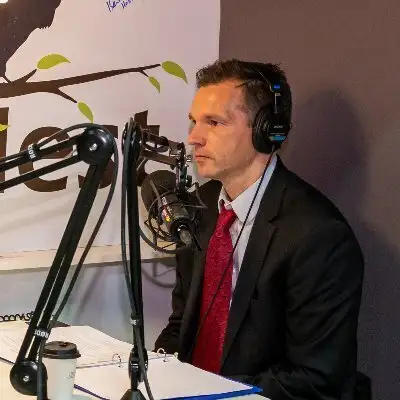
The US conducted a military operation against Venezuela to abduct and bring Venezuelan dictator Maduro to justice here in the US. Of course, like any operation, it is heavily reliant on electromagnetic spectrum operations. And so I wanted to talk a little bit about what that operation means for our community. I am pleased to be here with journalist and author and friend of the show, Mike Fabie.
Mike is an author of several books. He is also a journalist for Jane's Defense. Mike, it's great to have you back on the show. Thanks for joining me.
It's real pleasure. Thanks for having me.
You actually wrote an article on the operation for Jane's defense. Our listeners can find that article on Jet Online. We posted that for you. You've taken part in a lot of the after operation press briefings from General Kane and so forth. Tell us a little bit about what you learned about how the operation was conducted from an operational standpoint and how EW fit into it.
Speaker 1 (02:13.23)
Sure. Well, one of the things you're going to Venezuela and despite, you know, somebody that's also a Venezuela strong, it might be military or not. The fact is it does have a pretty robust defense system when it comes to, you know, folks coming in with aircraft, those coming in for any kind of operational type of thing. They've got some really good strong Russian systems there. And so one of the things that the that the U.S. really want to do with this.
was they want to make sure they got in there without losing any blue forces. They didn't want to use any US forces at all. They want to get in there clean and get out clean. And one of the most important things about that is to make sure that they take out the systems that are going to basically find, discover, detect, and then target any kind of forces you have coming over that way. It'd be the aircraft or...
ships come in and say whatever they might be. And so as part of that, taking out of those systems, one of the things they certainly use in this case were the EA-18G Growler aircraft, which are of course these modified Hornet super Hornets, to go and basically nullify those electronic systems that would do just that, that would detect forces coming in and target them for any kind of defense systems they have.
What was fascinating about it, when we were talking about, I think it was a General Cain that gave a press briefing about the operation. And one of the things that was fascinating was how the long preparation tail that this had. I they had been working on it for months. They were ready to go. They were just waiting for the presidential order to begin. And that came just after New Year. What does it say about our forces?
in terms of there are very few countries if no other countries could pull off what the US pulled off. What's that tell you about our training, our capability, and what we can do? almost, this was a little bit of a look behind the curtain about how we can, how great our American military capability is. What does it tell you about where we're at from a military strength perspective? Because this is a, this is a really
Speaker 3 (04:38.986)
intense operation that was very successful and it like you said, no, no blue forces were lost.
Well, from a military point of view, I won't get into the intelligence scenario and see whatever they did, but from a military point of view, one of the things shows to me is that all these years, only training, but acquisition and everything like that have really came to bear on this. mean, for ages now everyone said, oh, we really need to carry strike group four. You know, they're obsolete. And even then, you know, you talk about the preparation went for this, you know, when they moved to Ford.
the carrier forward from over the train into there. Oh, what are you going to do if a carrier strike group down there? Well, here's what you did. You took a bunch of growlers off that carrier, put them out over this and took care of business. So in other words, operate exactly how they're supposed to operate. There's still some question in after analysis of just at that moment, what system were turned on, turned off based on what was done beforehand. But nonetheless, there's no doubt about it. You know, putting a carrier there.
And then use that carrier as that platform, know, it's supposed to be this floating military installation, a floating airfield, military airfield. And so that would prove to be this case. You can use that platform, get those aircraft off there. And once those aircraft are in the air, once those growlers are out there, they are very capable. I mean, there's never been any doubt about that. And so that's what it showed to me is that, you know, that US systems actually, you know, they work.
And they can work as they're supposed to. And I think that goes a long way to proven wealth. You know, hey, it was worth it.
Speaker 3 (06:18.422)
I was reading a number of different accounts of the operation. And of course, when you're going through media, sometimes you don't know exactly how accurate some of the reports are. So you take it with a grain of salt. But one of the recurring stories or experiences that was reported was the fact that without warning, everything just stopped working at the same time.
And that was on several different reports. And you can tell, you can see from that standpoint, they were anticipating something. It wasn't out of the blue, but they did not know when or how or where, and instantly just everything went dark. And so that is electronic warfare at its finest. there was also other, obviously there were some US soldiers that were on the ground to apprehend. we know that they're helicopters. We know that there are other mission systems involved. But the strike
That's a show of force. I mean, when you have F-22s, Growlers, I don't know what else was involved in the operation, but that's a tremendous show of force for any potential adversary, but it sends a message.
It sure does. It sends a message that again, the Venezuelan systems are supposed to be some of most modern up-to-date. These weren't old systems obsolete or anything like that. So it sends a message that, hey, you might be protected by some of the newer systems, but that might give you protection you need. And again, as you said, everything was just shut off. So how was that done beforehand? know, kind of date the Earth to a still kind of moment from the old sci-fi movie. But at the same time, so that
That's the whole thing about the US. The US doesn't just rely on that military hammer, right? You know, in this case, so they see it the ground. They had gone in there. CIA operatives were working behind the scenes doing all kinds of things and helped to bring about the whole thing. again, that is, there is this whole thing about the US being able to have all these levers work together in a way they really haven't been able to before. You know, this whole thing of jointness.
Speaker 1 (08:22.298)
And it's doing this not only on military services, but of all different organizations came from this. know, something that US has really been striving for. And in this case, it surely worked. mean, you know, it just did. It worked like a charm.
And it did send a message. Venezuela is a key actor in South America as it pertains to what's going on over in the Middle East as well as in the PACOM. You wrote a book called Crash Back. You spent a lot of time over in the PACOM region looking at how we conduct freedom of navigation operations in South China Sea and the whole China Taiwan scenarios. Venezuela is the major supplier of oil along with Iran to China.
There's a huge connection between those two countries. And of course, we see unrest now erupting in Iran. think we see other places in South America. I Chile just had an election. There's ramifications around the world for something like this. From your vantage point, what impact does this operation have globally in terms of our adversaries around the world?
Well, I think you got to take it, you know, like you can't just look at this operation singularly. You can't say, OK, this if you look at the broad spectrum of things. So you had this operation. You had everything the US was doing in the Red Sea and the way they revolve into take care of threats there. You had the Iranian operation, right? Take that to politics, because that's just not my swim. But taking out the politics of what was right, what was wrong, was legal, illegal. Take all that out. If you look at just a straight military kind of thing.
Around the world, the US has been showing we're willing and capable of executing missions like this across the globe. That is a clear message to China, for example, saying we are willing to do things and we are capable of doing things. And despite what you may have, like your own propaganda, we are capable of doing things with these so-called obsolete carry strike groups or anything like that. Use them in novel ways.
Speaker 1 (10:26.766)
with their capability to execute these kinds of missions. so be on notice that the US military can and will do what, will to do whatever it takes, whoever's ordered to do.
Moving forward here, what are some of the related questions that you have remaining in terms of the operation or maybe what happens afterwards from a capability standpoint? There's still a lot of facts coming out. There's not going to be a lot more we're going to learn, quite frankly, because there is a lot that's classified to it that we just stay away from. So what are some of the angles that you're still looking to learn a little bit more on?
So I mean, one of the things right now is what is next? I'm not talking about politically, but I'm talking about you have these forces there, down there. They proved that the US is willing to use them and they're quite capable when they're being used. And right now the administration has talked about, for example, of doing attacks on Mexican territory for certain things. Basically blockades of Cuba. So in other words, these forces are down to how are these forces going to be used from this moment forward?
to basically execute what they're calling the new Trump doctrine, that Western hemisphere and that Southern Atlantic part of it. What is going to happen next with these forces? Are they there for good? Are we going to see a counter-strike group forever now, down in the Gulf? don't know, in that region? don't know. That's one of the things that certainly, there's a grower contingent now in Puerto Rico that they believe was part of this.
with a more advanced technology board. Well, are they there for good? Are we going to rebuild that up again? You know, Puerto Rico as well as before. So there's a lot more question of what assets are going to remain there, what the build is going to be, and how they're going to be used.
Speaker 3 (12:21.706)
I do sense that there's the signal, a number of different shifts in how we are organized globally from a military perspective. You we've said this in the past on the show that any China-Taiwan scenario isn't just going to be geographically isolated to China and Taiwan. It's going to erupt in proxy wars and conflicts and opportunities to exploit around the world anywhere and even domestically. So
this operation, I think it does send a signal that, we're not only a world power, but we can actually do things that no one else can. And I think that it'll be interesting to see how that triggers some shifting strategies long-term. It's clear that there's a long-term strategy involved in this. it took me by surprise, but it was something that was glad to see that we have an awareness that this is not just an isolated.
actor down here in South America or, you know, we're not looking at China and Taiwan in an isolated way. We understand that there's a connection to the Venezuelan oil, the flow of money and energy between the countries. There's a lot to work on and to watch to see how that develops.
Yeah, I totally agree. You mentioned about where these different battles could erupt. mean, right now, just over the last couple of days, President Trump himself has been citing China, the possible Chinese takeover of Greenland as a reason for the US to go in and take over Greenland itself. Yeah. Absolutely. that's for strategic reasons. They're talking about minerals there that they want to get, but also just where it's located is incredibly important.
So this is taking that whole geopolitical confrontation model and moving it, I don't know, forward or backward to the old days where you had big powers looking at, I don't know, territory grabs or as much as power grabs to show, you know, we're going to control this area because it's now very strategically important to us. And we'll take whatever measures we need to to control it as they did in Venezuela.
Speaker 3 (14:30.368)
And minerals and rare earth elements, they're a huge requirement for a strong supply chain around the world. We don't have access to those domestically and we have not had them. And so we've had to rely on China for it. And so now this is all part of a larger shift that we are now starting to understand a little bit more and it'll be interesting to see what happens. Mike, thank you for taking time for joining me here. Really appreciate your perspective. And of course, the articles that you write, we post on Jane.
Our listeners can go to JetOnline. post on JetOnline. you can go to jetonline.com to read his article. There's other articles and vantage points of the operation there as well. But thank you for joining me here on From the Crescent. I greatly appreciate it.
It's my pleasure.
Speaker 3 (15:17.806)
At this time, I'd like to turn to my special guest for today's episode, Dr. David Stout. He is the executive director of the Directed Energy Professional Society. I wanted to have him on the show to give us a state of directed energy as we go into 2026. Dr. Stout, thanks for joining me here on From the Crow's Nest. It's great to have you on the show.
Thanks Ken, I appreciate you inviting me.
All right. So you joined as executive director of Deps recently, earlier this year. Long time relationship with the organization though. So can you tell our listeners a little bit about Deps and where you're at today? Sure.
Happy to. It was founded in 1999. At that point, there wasn't really an avacy key advocacy group for directed energy per se. So when it was formed, it was concentrating on high energy lasers and high power microwave systems as the primary direct energy capabilities that were kind of closest to being fielded.
It's been going on, like I said, for over 25 years. And we hold conferences at the S &T topical areas, as as the systems areas, as well as T &E and some international activities as well. And most of our conferences are held sort of at the CUI or higher level. We don't do a whole lot of disray type meeting events.
Speaker 3 (16:47.686)
So I had your predecessor Mark Neese on the show a few times and worked with him in partnership between AOC and Deps. So I always had him on the podcast to give a state of directed energy heading into the new year. with that in mind, tell us a little bit about where you're at here in 2026 with directed energy and what opportunities you see on the horizon.
Sure, you know it's interesting and I think fortunate that honorable male Michael just came out. He's the Undersecretary of War for Research and Engineering with their priority technology areas. Last year they had 14. He sort of indicated in his video that he released that if you have 14 priorities you really don't have any.
They actually carved it down to six priorities and one of those six is scale directed injuries. So I was very happy to see that. So directed energy is going to remain a thrust area in R &E. And what I've been hearing is that should have a positive impact on the budget because right now there's a big push to get these capabilities fielded into programs or records and in the hands of a war fighter. And certainly I'm very interested in making that a reality.
I went to a depth conference probably a couple years ago, did a panel on integrating EMSO with Directed Energy earlier in development. A lot of the conversation at both of our conferences tends to be we need to get this technology into the hands of the war fighter, we have to do it early and often. But then sometimes with at least electronic warfare, maybe it is with Directed Energy, it gets a little bit later in the development cycle than you want to and we have to kind of move back earlier.
What are some of the opportunities?
Speaker 3 (18:43.074)
the operational opportunities that you see where we, the timing is right for us to integrate both directed energy and with EMSO and other call it exquisite capabilities or even in terms of mass, how do we get that into the hands of the warfighter earlier in development?
Yeah, I mean right now I think there is a what I would call a convergence of threats that are evolving on the battlefield and notably in the unmanned areas drone, drone swarms that are I think a good opportunity to get these capabilities out there quicker. Right now
The kinetic community, missiles, guns, what have you, is challenged pretty good by the drones and drone swarms that are now certainly very prevalent in the Ukraine war. So I think this is a time for really both more conventional electronic warfare as well as direct and energy warfare.
We are seeing a lot of TTPs evolve in the use of drones, which actually close what I call electronic attack vectors, particularly when you think about drones that have moved to fiber control and things like that. So there isn't a whole lot of free field radiation to interfere with. So that kind of pulls direct energy forward and then being able to address those drones. But then as we move into the swarm threats,
I think that'll start to open back up electronic attack vectors since a lot of times there's interdrone communications that are required for them to function as a swarm and I think those could be avenues for attack with electronic warfare. So I think basically the operational demand is starting to grow and be there for MSO capabilities to address this threat which is very prevalent on the battlefield today.
Speaker 3 (20:57.326)
So, at your shows, think what's always fascinating is to see how the depth and the breadth of companies and technologies that are in the directed energy space. You walk the floor, we're recording this here at AOC 2025, a lot of component manufacturers, and it's one thing to say, hey, we need to have something that's smaller, more adaptable. But once you start applying that to all the components that go into a system,
regardless of whether it's directed energy, EW, you name it, a lot of challenges arise. You're really in tune with the component sector in the direct energy community. What are some of the challenges that you continue to face in terms of getting your entire community on the same page to scale smaller, faster, and larger quality?
larger quantities for the next fight.
Yeah, and I think the one thing you left off that list is cost. Cost, yes.
You know, there's been really a lot of great advancements in the laser diode technologies that are used and the fiber lasers that are used as the fundamental elements of high energy laser systems, for example. The electrical and optical efficiencies are going up quite a bit, over 40%, which means that's less heat that is generated that you have to address with cooling systems. And then all that leads to smaller size weight power.
Speaker 2 (22:36.108)
and cooling requirements to be able to integrate those capabilities on the platforms. The industrial base is pretty taxed. mean, we're just with the systems that are in development today that's putting a pretty significant demand on the laser diode industries. They are spooling up slowly, but they are also, it's kind of a cat and mouse where they're waiting for those larger orders.
you know, to come in. know, unlike the EW community that enjoys a much longer heritage of programs of records and fielded platforms, you know, that's kind of why you're able to have such a large exhibit hall as you have here, because you've had these platforms out there for decades and you have the whole dot mill PF that's been done on these systems and that continuity has helped your industrial base to grow. So we're still...
in the fledgling times in direct energy. we're getting fieldable prototypes out there. We're getting initial units out there for operational evaluations. So the industrial base hasn't really caught up. Other things like optics that are used for high energy laser systems is a very niche capability that has a very limited industrial base. And then on the microwave side, the high power tube manufacturers, again, you have some here, CPI for example.
that develop high-power microwave tubes that can be put into high-power RF weapons. you know, it's just the level of demand right now since there's a lot of R &D going on and not a lot of programs or records. Industry is sort of, I would say, dabbling and staffing up in their ability to address the needs.
But I think as we get these things out there, as the demand goes up and as the orders go up, I think that's when you'll see the industrial base respond a little more strongly.
Speaker 1 (24:34.51)
Thank
So, it's got to be a challenge though to encourage companies to innovate, to think ahead, to see where the market's going, where technology's going. But then on the backside with it being so heavy R &E or R &D, not a lot of procurement money behind it. What is your message to companies that, hey, we want to get into this space because there's so much opportunity.
But we also have to be mindful of the fact that we can't over-invest in an area where there's not that track record of program dollars coming in from an acquisition procurement standpoint. So how do you juggle that with your customers and your community?
Well, I when I talk to the folks up at R &E that are responsible for direct energy, the demand signal, I would say, has never been higher. Coming both from the warfighter side as well as the acquisition community, people want these capabilities. But industry and the government labs, they need to be able to produce these things
and have them operate reliably on the battlefield once they get in the hands of the warfighters. So we have to keep the reliability up. But if we were able to do that with the growing demand signal, think, and there are number of programs that are sort of on the verge of program of records right now. So I think we're going to see increased...
Speaker 2 (26:15.178)
acquisition demand for direct energy capabilities that are going to start to increase the numbers. But I would ask that they don't try to recoup all their IRAD first go around. We have to keep the prices reasonable. Otherwise, we're not going to be able to get our foot in the door. But I think if we can get these things deployed, there's a heavy demand. And I think from what I'm seeing in the threat space, they're going to be used for some time to come.
I think that's one of the frustrating things as a spectator to the Director of Energy Community. think pre-COVID or like 2018, 2017, I went out to, first started going to DEPS conferences and it was really interesting being out there because at first people came up to the booth that we had there and like, what are you doing here? Like you're EW, get out, we're Director of Energy. Over the years after that, it started to come together, you could see that integration work.
Speaker 3 (27:20.482)
What can AOC do as representatives of the EW community? How can we work more closely with the directed energy community moving forward so that we can, because what we don't want to see is we struggle with getting leadership involved and really championing.
the some of the advancements that we needed in the field. know we need EW, we know we need spectrum advance dominance, but sometimes it takes a war or in tragedy or of some sort to really say okay now we need to invest and we have to get that solution to the field really quickly. We know we need it, we know we need direct energy, we can't wait for the fight because you're never going to get it in the field fast enough.
how can we work together to get leadership on the same page that, these are the capabilities that are gonna win the next fight. You gotta have them in the field now, not wait until the war starts.
Yeah, I it's great question. I the first step is just organizationally the collaboration between DEFs and the AOC. I mean I've been giving...
direct energy related talks both nationally and internationally in AOC events for I think since 2018 or 17 timeframe. So, you know, I enjoy doing that. I enjoy educating folks more in the technical community about the direct energy community because a lot of times the two don't seem to mix. You know, this whole notion of get out, mean, from my standpoint, it's all in so whether you're talking electronic warfare or direct energy warfare, it's all electromagnetic spectrum.
Speaker 2 (29:00.144)
spectrum operations. I will say it's interesting to see, for example, in directed energy, the laser demand is pretty high, but I will say some of that is because leadership understands a high energy laser. It's effectively a blow torch at a distance, so you basically put a spot on a target, you hold it there long enough to deposit the energy, and when you get that energy, you kill the target, right?
wrap their head around that pretty readily. When you start talking electronic attack, when you start talking high-power microwaves and coupling in the targets and exploitation of targets, I think some of the issues that the AOC and the EW community suffer from and that the HPM community suffers from is it's very complex. I think we need to do better at educating leadership in terms of
making them understand our level of knowledge of these capabilities and how well they work. mean, but I mean, you've experienced a lot of that with EW. Like I said, there's prowlers and growlers and fielded systems. So I think the direct energy community can learn a lot from your hard learn lessons in the EW community, even though I realize even as mature as EW is.
you still have some of same challenges with funding and people understand missiles and they understand things that go boom, but in the spectrum, like I said, they can relate to lasers, but when you start talking microwaves, when you start talking the electronic attacks, off-kill kind of things, it's a challenge just to get them to be willing to sign up and say, yes, I believe in it, that's going to work for me and let's get it funded.
It really comes down to getting that leadership in place that has the authority and resources to make it happen. Be the problem owner. Say, hey, this is my watch. This is going to get done while I'm in service. And really take that. Be willing to be the problem owner. Take the risk and hold the DOW accountable. We've talked a lot. Again, we are at AOC 2025 this week.
Speaker 3 (31:23.029)
A lot of the conversation has been about, of course, every fight is going to be a joint fight. Every fight is going to be a coalition fight.
Looking at those two pieces, talk to us about the challenges of directed energy in the joint fight, working with each of the services that are separately required to man, train, and equip for their responsible domain, as well as the coalition piece. It's one thing to get the money for US capability, but then you have to work with our allies and partners, whether it's in Europe or in Dopecom. How do those two challenges play out in the directed energy community?
Yeah, I'll actually start with the international piece first.
I participated in NATO for probably about 20 years, where initially it was on the high-power microwave side. had a number of working groups, tentative working groups under the Sto, Science and Technology Organization of NATO, where a lot of the NATO countries would get together. We were looking at it primarily from a defensive perspective, like other countries' potential adversaries were developing HPM capabilities, so how could they impact our own
Blue Force systems and that's kind of the the angle we primarily took and then I ended up being the member of large for direct energy in NATO Sto and stood up a high-energy laser technical working group and now that's gone for a couple iterations as well and the laser one was specifically focused on
Speaker 2 (32:57.25)
on fielding these capabilities in a coalition environment. You know, can't just kind of have one country come in with a high energy laser setting up next to another country that has no knowledge of it or experience or understanding and, you know, never the two shall meet kind of thing. I mean, what you want to do make sure in a coalition environment as well as a multi-service environment that the communication channels are open, the understanding is there about what each other
has and what they're fielding and putting on the battlefield and making sure you're addressing any of the, you know, the fratricide and related issues that might arise out of ignorance. You know, so basically it's getting rid of that ignorance of what the other folks are doing.
Now you were president of Deps on the board for a couple years. years. years. And now you're executive director. What is your vision for the organization moving forward as someone who's played a key central role over the last number of years?
Yeah, mean, of the things I'm trying to do is just kind of, you know, this is a rather turbulent time, I think, for organizations that run professional meetings. There's a lot, and we had, it's funny, we had a similar kind of thing happen back, I was actually in the Pentagon at the time when the sequestration hit, and there was a big clamp down on attendance and participation at conference events.
So the first order of business in my opinion is really just helping the organization navigate through all the policies that are coming out and instructions and memos, travel restrictions, all those things to help people walk through and also get the leadership educated into the value add that an organization like DAPPS or the AOC brings to their technical workforce to make them function much better.
Speaker 2 (34:57.565)
You know, the...
Now the other thing is, as I said, I use the AOC often as...
Speaker 2 (35:14.806)
An example of where I would like to take depth. You guys have been around a lot longer, you're a lot bigger. You have a lot more warfighter engagement. I think that comes from the fact that you have actually fielded a large, very large number of EW-centric platforms and systems. having that warfighter feedback is something that we have not enjoyed that much in the direct energy community. So as we're starting to get systems into the hands of the warfighter,
We want to reach out to them, bring them into the community and get that feedback process flowing with our technical developers. We do a lot of work at DEPPS with regard to graduate research grants and undergraduate internships. I want to grow those programs within DEPPS. We've probably put out a...
very large dollar amount in terms of those grants and scholarships and internships. And right now, I'd say we probably have greater than a 90 % placement of individuals that we have kind of fostered through our education programs that are now working inside the direct energy community. So I'd like to see that grow. Generally, obviously as any society, want the society to grow.
in numbers as well. So, you know, the warfighter engagement piece, that's big. So, you know, that's why we do systems. We have the S &T, but the systems is specifically focused on systems that are getting out into the hands of the warfighter. We want to do more of that and do the advocacy and do the education. Even on the Hill, we have a direct energy caucus.
in the house and certainly keeping them informed and up to date on where the community is going I think is also equally important.
Speaker 3 (37:18.766)
Who runs the directed energy caucus these days? I know we used to work very closely with Congressman Langevin from Rhode Island when he was here. I personally have not been tracking over the last year, so I'm not aware of who's running it.
Yeah, so actually to be honest, neither am I since once they retired. I'm trying to find out actually right now what is the status of the caucus and intend. In fact, I still work with Mark Knee, so we're probably going to, you know, re-engage to try to get that reestablished because I think it's that whole education piece. We don't lobby at all, but educating is a critical function that I think we need to continue to do because they also need to understand this very complex technology area.
And you have to bring everybody up to a baseline understanding in order just to even begin to tackle some of these complex issues. if you don't understand how the technology even works or what all the pieces that go together to make the system effective in a mission, you're not going to be able to say, hey, we need X amount of dollars, or we need to change authorities, or we need to do other things. So it's really a challenge. I know for AEW.
We're constantly restarting our education effort because every year or two you're going to get such an inflow of new staff and members. lot of retirement's happening this year in advance of the election next year. So we're in the same boat where we kind of have to start over with the EW working group too because it's to get that new blood in there.
Yeah, and it's nice. We do a lot of work with the Naval Postgraduate School. In fact, that's where our systems meeting is going to be held actually next week. And it's interesting to find out that the CNO...
Speaker 2 (38:59.102)
actually the currency you know actually has a master's degree in free electron lasers from the Naval postgraduate school so I mean we actually talk about having leadership that is at least educated in the field of direct energy that's that's kind of a rare event but you know I tell you when I first started developing and standing up the direct energy work at NSWC Dahlgren back in the early 90s I mean I couldn't find two flags in the Pentagon that would even talk to me about direct energy I mean there was kind of
It's kind of a pariah type topic, but when I went up and worked for the Under Secretary and I stood up to enable Direct Energy Steering Group, we developed a vision and strategy and then roadmap for Direct Energy within the Department of the Navy and that actually helped elevate the visibility of more senior levels. And then back when I used to work for Booz Allen, we used to do our D summits and we got a lot of leadership involved in those and those were very helpful.
in getting leadership educated on the topic and advocacy.
Well, David, thanks for taking time to stop by here and tell us a little bit about what we can expect to see from Directed Energy Community here in 2026. For those who are not familiar with the organization, they can go to deps.org. And you have some upcoming events coming up, and you can engage that way. Is there any other information in terms of that people need to know to reach out to you?
I mean, the simple one is www.Depths.org. And you can feel free to reach out either to me or anybody on the staff if you have any questions. We have exhibitors. have a lot of speakers. And yeah, we'd love to get more participation, more collaboration.
Speaker 3 (40:42.974)
Well thank you, looking forward to it and it was great talking, catching up.
with you. Thanks Ken. Great chatting again. Bye.
Speaker 3 (40:52.814)
That will conclude this episode of From the Crow's Nest. I'd like to thank my guests for joining me here on the show. As always, please take a moment to review, share, and subscribe to this podcast. We always enjoy hearing from our listeners, so please take a moment to let us know how we're doing. That's it for today. Thanks for listening.
Creators and Guests